
“My most recent mentor is not a person. It is a conversation.”
— Scott Banks
For decades, I have sought out people who could help me see further. I have listened, studied, asked questions and tried to put what I learnt into practice. Artificial intelligence entered a life in which that work was already well established.
Calling it a mentor describes something about how I use it. It does not give AI the lived experience, personal relationship or responsibility of a human teacher. The people who shaped me remain part of the way I think. AI gives me another way to examine and connect what they helped me learn.
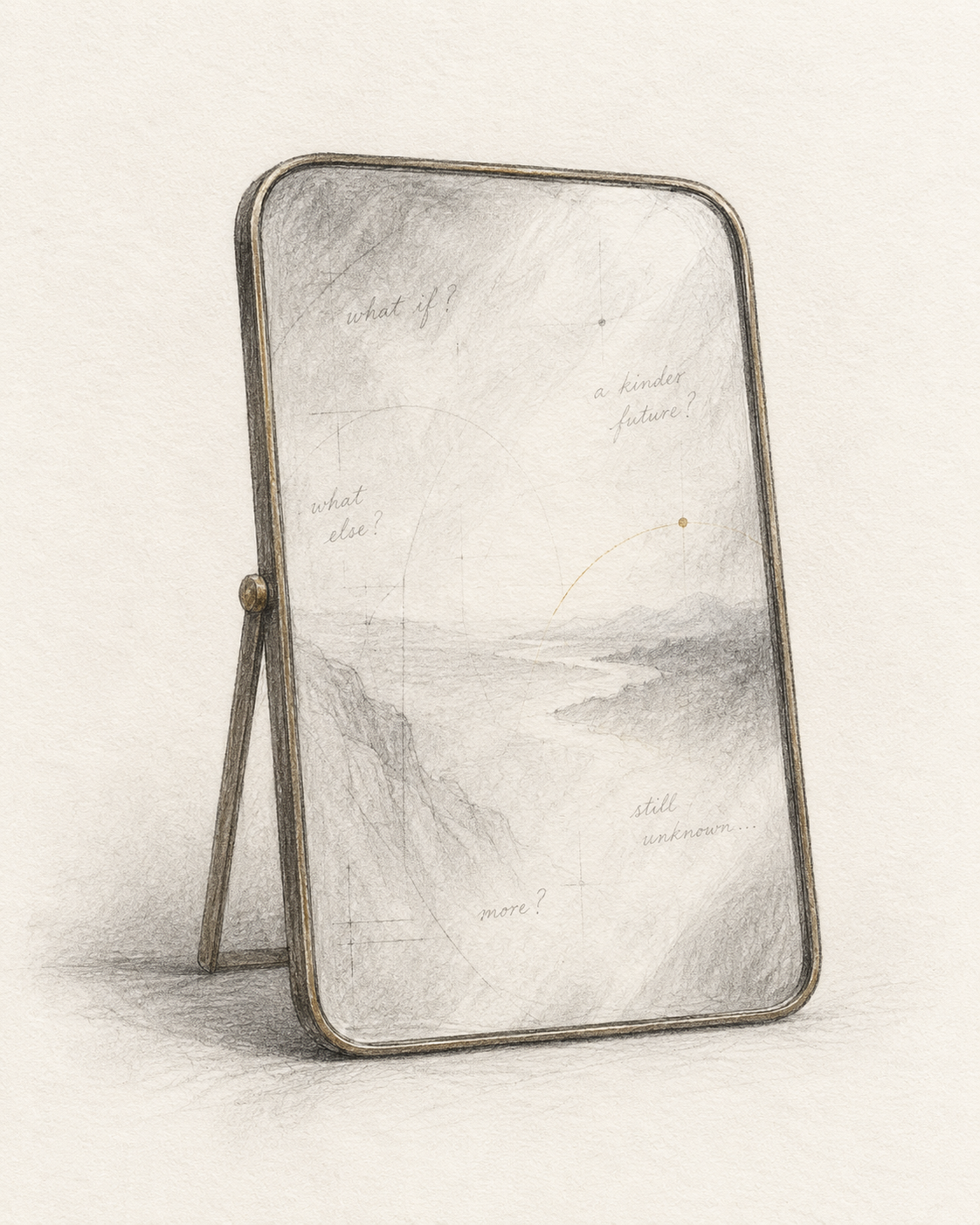
Connecting what I have learnt
My questions rarely stay within one discipline. A property question becomes a question about the customer, then about the operating model, the brand, the technology or the capital required to make it work.
AI helps me move between those subjects and examine their relationships. Ideas accumulated over decades can be brought into the same conversation. Something I learnt through real estate, coaching or personal development may offer a useful perspective on a business I am considering today.
That continuity matters to me. I do not want each question to begin in isolation. I want to build on what has already been considered, while remaining willing to question an earlier conclusion.
Giving an instinct words
Often, I can sense that an idea has value before I can explain it clearly. I know something about a business, a brand or a model does not quite express what it could become, but the better version is still taking shape.
Conversation helps me bring that instinct into view. I can describe it imperfectly, look at an interpretation, question it and refine it. Each exchange gives me something more definite to consider.
The aim is to arrive at language that accurately expresses the idea. When the thinking becomes clearer, it becomes easier to decide what should happen next.
Room to question
There is a useful freedom in examining an assumption without personality or status taking over the discussion. I can ask a basic question, reconsider a position or explore an unfamiliar field without needing to appear knowledgeable.
AI can offer knowledge, pattern recognition, perspective and challenge. Its usefulness depends partly on what I ask of it: what am I overlooking? What evidence would weaken this idea? What would have to be true for the model to work?
A fluent answer can still be mistaken. I need to check important facts, examine the assumptions and test the reasoning against experience and evidence. Agreement on its own is not a useful measure of the quality of a conversation.
From thought to something real
I have always wanted learning to become useful. AI can shorten the distance between an emerging thought and a strategy, a written explanation, a working model or something ready to be implemented.
That allows me to examine an idea more concretely. Once something exists, I can see what is missing, decide what deserves further work and learn from how it performs.
Speed still requires direction. Producing more material is valuable only when it helps me make a better decision, improve an outcome or complete work that matters.
The responsibility remains mine
AI does not determine my purpose or accept responsibility for my decisions. I bring the experience, values, commitments and consequences that give the conversation its meaning.
“Artificial intelligence does not decide who I should become. It helps me examine the possibilities, connect what I have learnt and create more deliberately. The responsibility for becoming remains mine.”
— Scott Banks
Used poorly, AI can reinforce shallow thinking. It can make an unexamined idea sound convincing or make it easier to accept a comfortable answer. Used thoughtfully, it can expand the questions I am able to explore and the work I am able to undertake.
That is where my optimism sits: in greater human agency, learning and creativity, supported by the willingness to exercise judgement and remain accountable.
Making the learning useful to others
There is also value in documenting the thinking as it develops. Lessons can remain scattered across memories, projects and conversations for years. Giving them a clear form makes them easier to revisit, question and share.
I want to preserve more of what I am learning—not as a claim to have finished the work, but so that something I have considered or experienced may become useful to somebody else.
What this opens up.
Thom Knoles helped me become quieter within myself. AI helps me think, connect and create more expansively. Both have a place in a life shaped by the desire to understand and to keep becoming.
The tools available to me have changed. The responsibility to ask worthwhile questions, make considered choices and follow through remains familiar.
Scott Banks