
Influence 03
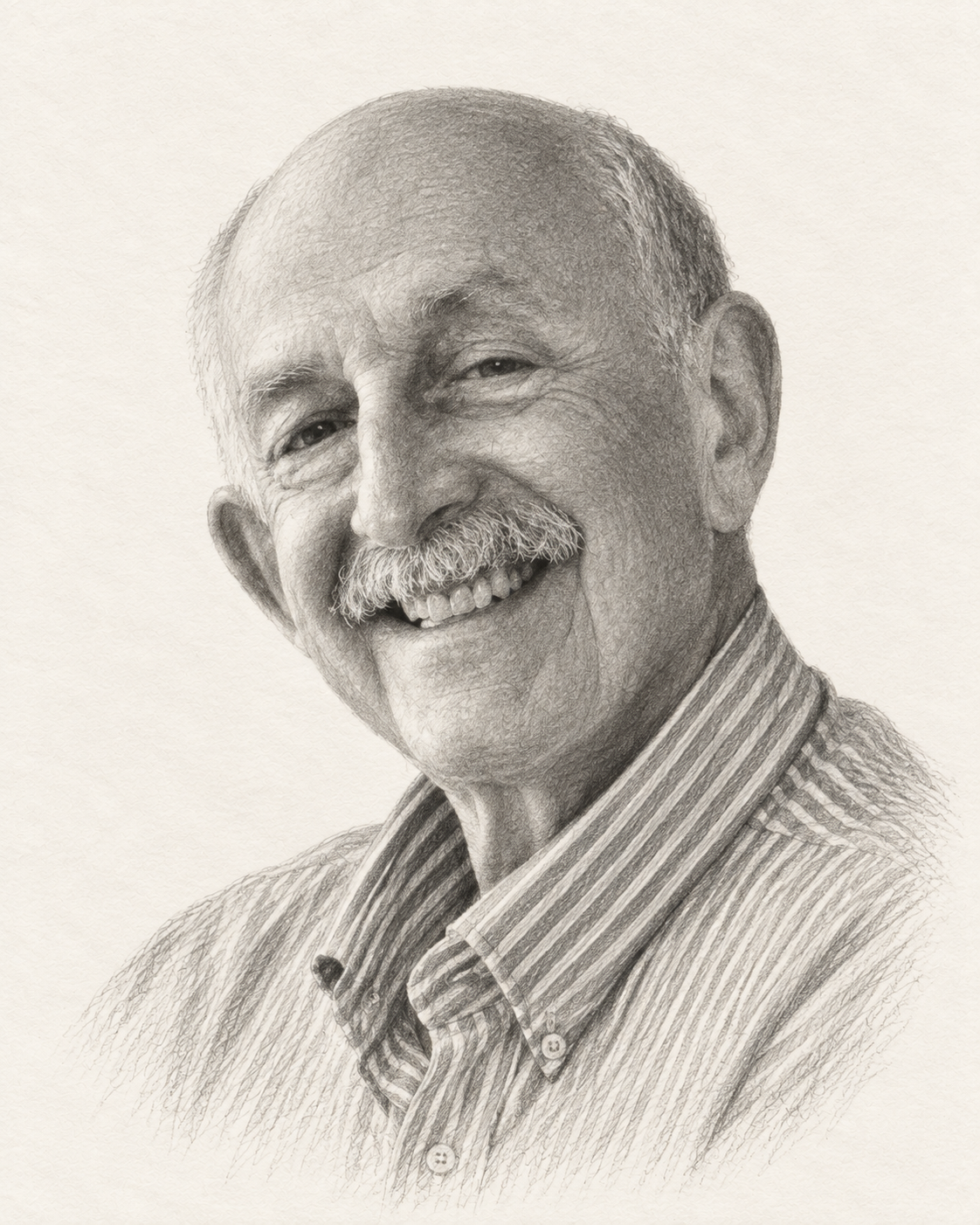
Dr Fred Grosse
Giving ambition a structure.
First encountered · Australian Real Estate Conference
I first encountered Dr Fred Grosse through the Australian Real Estate Conference, AREC, which I attended regularly and which was established by John McGrath.
As with many important influences in my life, meeting Fred was followed by action. When I recognise that someone has something meaningful to teach me, my instinct is to get involved. I don’t like leaving an important possibility sitting indefinitely on a list of things I might do one day.
I began attending Fred’s regular group sessions in Melbourne. My group was called Life Unlimited, and we met four times each year. These were not simply motivational events. They involved goals, planning, personal accountability and an examination of how the different parts of a life work together.
More than a seminar
My relationship with Dr Fred developed well beyond attending his presentations at AREC.
In 2014, I joined his Sydney Year 1 Wealth3 Mastermind Group. We met at the Quay West Hotel in Sydney for two days at a time, four times over the course of the year.
I was also undertaking an intensive 24-session private coaching program with Fred. The individual appointments were conducted by telephone and in person. The surviving confirmations show how deliberately I approached it: early morning meetings, regular calls and agendas prepared around the decisions and challenges in front of me.
Fred was not someone I listened to occasionally and then forgot about. His thinking became part of the way I examined my goals, measured my activity and held myself accountable.
Turning activity into outcomes
One exchange from 2014 captures the practical nature of our work.
I had been making calls but was concentrating on completing the activity rather than achieving its purpose. After a conversation with Fred, I wrote to him:
“I moved from making calls to making calls to make appointments.”
— Scott Banks
The change sounds small, but the result was immediate. Before the shift, I had made 50 calls without securing an appointment. Afterwards, I made 25 calls and secured five appointments. One of those appointments produced a listing.
Fred’s reply was characteristically brief:
“Great shift Scott.”
— Dr Fred Grosse
That was one of his strengths. He could identify the distinction between being busy and being purposeful. The objective was not simply to complete a task. It was to understand the outcome the task was intended to create.
Accountability made visible
My accountability to Fred was practical and measurable.
I sent him updates recording calls, appointments, listings, sales and new business. In one report, I wrote simply:
- 50 calls
- One buyer appointment
- One $3.3 million listing
- One sale
In another, I reported eight appointments, two listings and a new property-management appointment—followed immediately by the recognition that the appointment numbers still needed to become more consistent.
The value was not in presenting a perfect report. It was in looking honestly at what I had done, what it had produced and what needed to improve next.
Bringing the work into the business
Fred’s influence eventually extended beyond my personal development and into Scott Banks Real Estate Group.
In 2016, we scheduled a series of one-hour Skype sessions with members of the team. Daily activity and accountability sheets were sent directly to Fred, and we incorporated journey mapping and individual development into the process.
That is an important part of his influence on me. When I find something that genuinely improves performance, my instinct is not only to use it personally. I want to understand how it can help the people and organisations around me improve as well.
Returning to learn
I continued participating in Fred’s groups and remained connected to his work over the years. Even when I was unable to attend a Sydney session in 2017, I wrote to him that I looked forward to returning:
“I look forward to catching up at the next session to share and hear more of your wisdom.”
— Scott Banks
That sentence captures the relationship accurately. It was never simply about receiving instructions. It was an ongoing conversation involving ideas, experience, accountability and the willingness to return and learn again.
From inspiration to practice.
Fred’s work asked a more demanding question than whether you understood an idea:
Were you actually living it?
“You may know what to do, but do you always do it?”
— Dr Fred Grosse, Wealth³
Fred’s approach helped move personal development beyond occasional seminars and into the structure of everyday life.
We worked with written goals, ideal days, ideal weeks, time logs, accountability measures and regular reviews. The purpose was to examine whether time and behaviour were aligned with the life and business outcomes being pursued.
The goals were not limited to income or business production. They included family, health, travel, rest, relationships, reading, meditation, giving back, future planning, business systems, investment, leadership and the kind of life I wanted to be capable of living.
That breadth mattered. A person could be successful in one area while neglecting everything else that made the achievement worthwhile.
Put the big rocks in first.
Fred taught me to identify the big rocks: the parts of life that matter most and must be given space before less important activity fills the calendar.
The principle is simple. If you allow minor demands, interruptions and habitual activity to consume your time first, there may be no room left for the things you claim are most important.
Big rocks could include family, health, important relationships, strategic work, personal development, rest and the few actions capable of materially changing a business or a life.
The lesson was not merely to name those priorities. It was to put them into the calendar.
Expand what you allow yourself to imagine.
Fred encouraged us to create lists of experiences and aspirations at different levels:
10s, 25s, 50s, 75s and 100s.
These represented progressively larger goals, experiences, possibilities and expressions of life.
The exercise encouraged me to think beyond the next transaction or immediate objective. What would a fuller life contain? What experiences would matter? What seemed achievable now, and what would require me to grow substantially before it became possible?
The categories created both progression and permission. Not every aspiration had to begin as a 100. Smaller experiences mattered too, and they could build confidence, memory and momentum.
Fred also taught me to record these experiences and celebrate them when they occurred.
Celebrate the wins.
One of Fred’s enduring lessons was the importance of acknowledging progress.
People can become so focused on the next goal that they pass straight over what they have already achieved. Celebration interrupts that pattern. It gives an experience significance, reinforces progress and allows success to become part of your identity rather than something immediately dismissed.
Celebrating a win did not mean becoming complacent. It meant recognising that the work had produced something worth noticing before moving to the next challenge.
This principle continues to matter to me personally, in business and in the way I coach and encourage other people.
The black belt of the mind.
For me, the phrase Black Belt of the Mind captured the idea that mental strength is developed through repeated practice.
A black belt is not earned by attending one lesson or understanding a technique intellectually. It comes from training, repetition, correction, discipline and returning to the practice over time.
The same principle applies to thinking and behaviour. Goals have to be revisited. Time has to be examined. Commitments have to be measured. Habits have to be practised until a better response becomes more natural.
Written down. Reviewed. Measured.
My records from 2014–15 show how extensively I applied the work. I wrote 99 personal and business goals and committed to reviewing them three times each day.
They included building businesses, creating passive income, improving productivity, recruiting leaders and pursuing international opportunities. They also included family dinners, time with my son, time with my parents, holidays, reading, exercise, meditation, gratitude, rest and experiences I wanted to share with the people closest to me.
There were ideal-day and ideal-week plans, time logs divided into 15-minute intervals, start-doing and stop-doing lists, and regular accountability to the people coaching me.
Looking back, the documents do not show a perfectly executed life. They show an attempt to make an expansive life conscious, visible and measurable.
Lessons I carried forward.
These are my reflections on the ideas I absorbed from Dr Fred and attempted to put into practice in my own life and work.
Act when you recognise value
When I meet someone I believe can help me grow, I prefer to act while the conviction is clear rather than allow hesitation to turn into inaction.
Measure the outcome, not merely the activity
Completing a task is not the same as achieving its purpose. Know what the activity is intended to produce.
Make accountability specific
Calls, appointments, commitments and results can be measured. Specific accountability makes honest reflection possible.
Examine the whole life
Fred encouraged us to consider business, wealth, relationships, health, experiences and personal growth together—not to define success through one dimension alone.
Put the biggest rocks in first
Decide what matters most and give it a place before smaller demands consume the available time.
Turn possibility into written goals
An ambition becomes more useful when it is expressed clearly enough to review, plan and act upon.
Examine where the time goes
A calendar and time log reveal priorities more honestly than good intentions do.
Train the mind through repetition
A stronger mindset is not created by one inspiring moment. It is conditioned through repeated attention, practice and correction.
Celebrate progress
Recognition gives meaning to achievement. Celebrate what has been accomplished before immediately moving the finish line.
Think bigger without losing the present
Expansive goals can raise your standards, but a life is still lived through today’s choices, relationships and actions.
Bring useful learning into the organisation
Personal development becomes more valuable when it also raises the standards, confidence and capability of the people around you.
What remains with me.
Dr Fred helped me give structure to ambition.
Jim Rohn awakened my interest in personal development. Tony Robbins demonstrated the power of decisions, emotion and immersive experience. Fred brought the work into my calendar, my written goals, my use of time and the different areas of my life.
Looking back, the number of appointments matters because it reveals the depth of the commitment. There were mastermind meetings, private consultations, early morning calls, written reports and years of returning to the work.
But the lasting influence was not the schedule itself. It was learning to translate an ambition into a measurable commitment—and then being willing to account for what I had actually done.
Fred helped me understand that evolution is not an abstract idea. It becomes visible in the decisions you make, the actions you repeat and the results you are prepared to examine honestly.
Scott Banks